
The Kapre
A brief history
Probably the second most popular mythological creature in Filipino mythology, after the tikbalang, is the tobacco-smoking, tree-dwelling ogre known as the kapre. The name kapre was a term derived from the Arabic kafir, meaning “heathen”. The Spanish term cafre was used to describe the Aeta people, whom they also referred to as negrito due to their dark skin, curly hair, and other features they ascribed to the people of the African continent. In fact, the smoking of tobacco was something introduced to Filipinos by the Spanish, and the fact that kapres are often portrayed as tobacco smokers serves as but one example of how much Filipino folklore and culture were influenced through centuries of Spanish colonization.
So if the myth of the kapre was so heavily influenced by the Spanish and the term kapre itself originated from them, did this mythological creature actually exist in pre-colonial folklore? The answer is yes, to a certain degree. Creatures similar to the giant, dark-skinned kapre exist in other cultures, albeit by a different name. There were the kirbas from the Ilocanos, the gisurab from the Isneg, ani-ani from Zambales, manangilaw from Bicol, talahiang from Zamboanga, and many others.
The Kapre in popular mythology
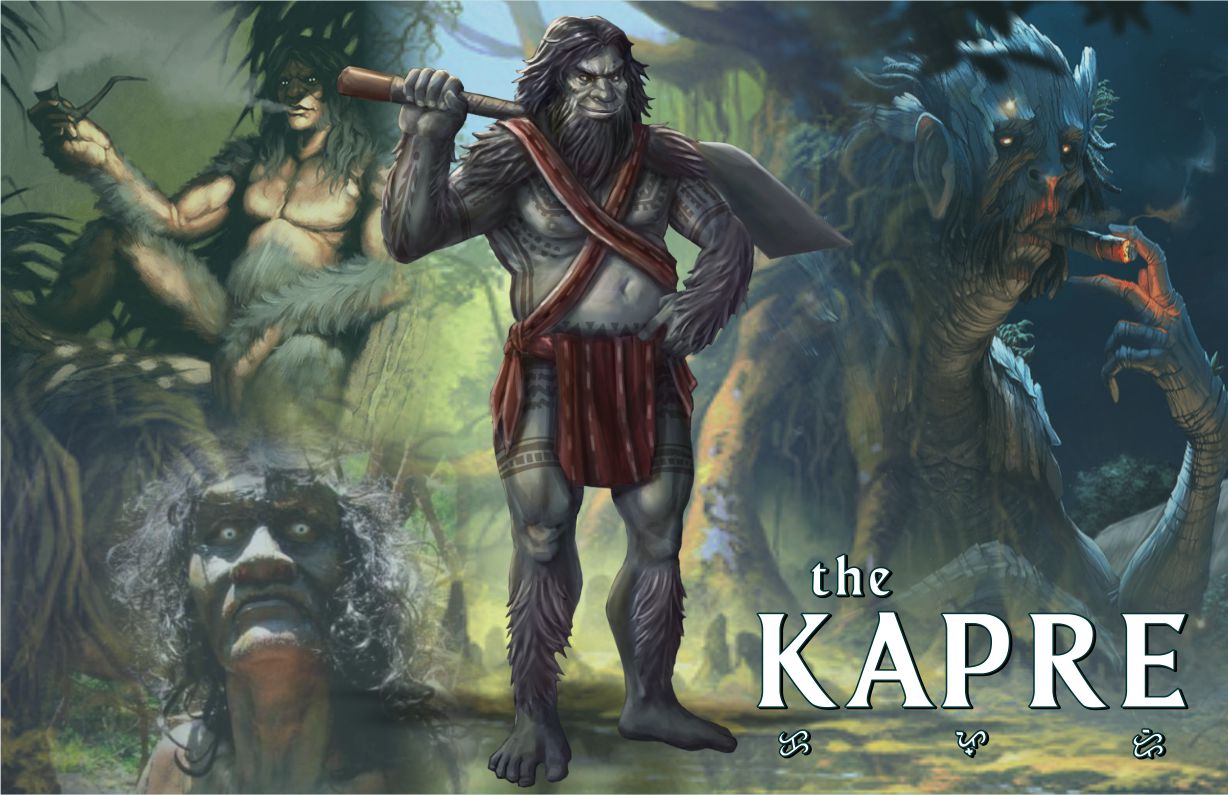
In Tagalog folklore, a kapre is a tall creature with pitch-black skin. It lives in huge trees like the fabled balete tree, wearing nothing but an old, tattered loincloth, and smokes tobacco that doesn’t burn out. It can take on various shapes and disappear at will. According to other folklore, the kapre sometimes wore a belt or waistband, which made it invisible to humans.
Although sometimes regarded as an evil entity that plays harmful pranks and abducts or sometimes even attacks women, the kapre can also be friendly towards humans. Some of the old lore suggests that when someone suddenly feels disoriented or themselves lost, even though they are in familiar surroundings, it is a sign that a kapre is playing pranks on that person. Telltale signs that there is an invisible kapre up in a nearby tree are faint voices or laughter, the sudden rustling of branches and leaves, glowing red eyes in the dark of night, and, of course, the sudden smell of tobacco being smoked.
It was rumored that a kapre has a soft spot for the downtrodden, especially those with mental disabilities. Some rumors suggest that some kapres have a magical white stone smaller than a quail egg, and should anyone happen to obtain this stone, the kapre can grant wishes to them like a genie.
In the Alamat Book Series
Kapres, in my books, is a generic term for tree ogres or mid-sized giants. Created from an ancient race of giants called the Kapir by the Dians alongside the first humans, the kapre is one of the many races of the nilalang-lubong or earthbound creatures created by the Poons. Similar to the tikbalang, anggitay, duwende, and other mythological creatures, the kapre was given the gift of free will. Kapres can choose to be good or evil. They can choose to remain in Kaluwalhatian and serve the deities, go to Kalupaan and live with the humans, or join the Yawàs in their war against the light.
Just as in the various folklores from the different tribes and peoples in the Philippines, there are other kapre variants in the Alamat mythology. Some evolved over the centuries based on their preferred dwellings in Kalupaan, like the mountain-dwelling kapres, who have a grayer hue to their skin, whereas the jungle-dwelling ones are greener. Others, like the inlablabbuot, who are passionate about smithing weapons for the Poons, developed dark, ashen skin and large hands from centuries of working in forges and hammering metal.
And then there are those who chose a darker, more sinister path to follow. Kapres, like the predatory kirbas, developed large, fanged, predatory teeth for feeding on human flesh, a powerful night vision from living in deep in dark caves, and an affinity for abducting and torturing women. The dim-witted gisurab monsters who prefer to dwell in the dark hellscape of Kasanaan, and many others throughout the three realms.
Most kapres are not portrayed as dull brutes but rather as large, cunning, and powerful warriors. As warriors of the Poons and Yawàs, kapres are the grunts and the shock troops in the armies of the gods. With their size and legendary strength, they are usually on the front lines to either take the brunt of an attack or the hammer used to batter and smash the enemy lines. Whatever version or form they might take, whether for good or for ill, kapres will always be some of the most dangerous creatures in the Alamat Book Series.