
Taguwasi, The Filipino Airbender
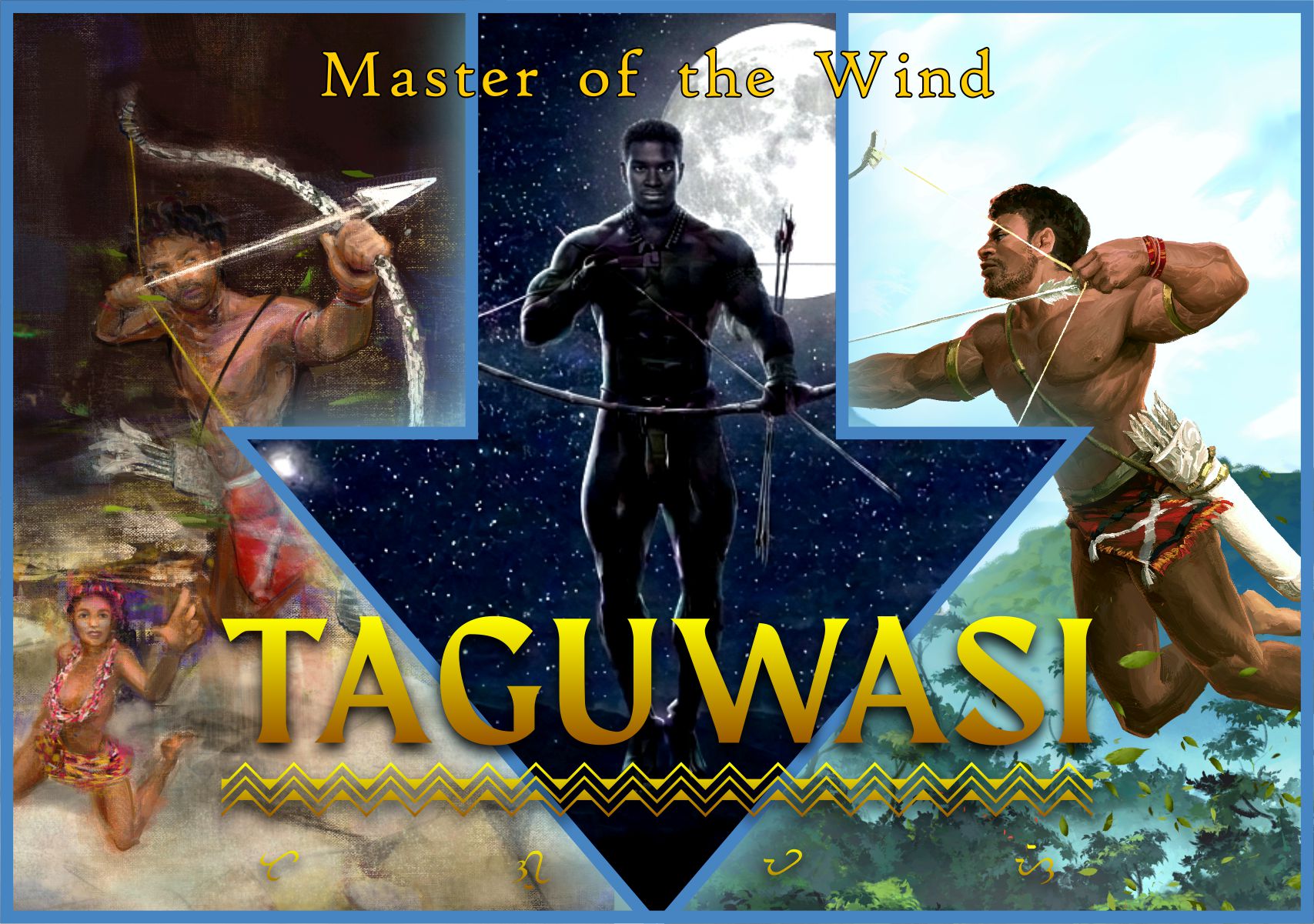
In light of the second season of the live-action Avatar: The Last Airbender dropping in a few short days on Netflix, I thought I'd make a post about a little-known Filipino epic hero called Taguwasi. Just like the titular hero, Aang from ATLA, Taguwasi had the ability to control the wind.
Origins
The epic of Taguwasi originated from the Labin Agta or Aeta people from the far northern corner of Luzon, modern-day Cagayan Province. Like other pre-colonial Filipino oral epics passed down from generation to generation over the centuries, the epic Taguwasi was no different. The original epic, called Nanang: I Taguwasi anna I Innawagan, dates back more than a thousand years, long before the Spanish arrived in 1521.
But unlike other Filipino epics that were set to ink and parchment by Spanish missionaries, the tale of Taguwasi was only transcribed onto a permanent medium in 1977. The oral epic itself was a nanang tale, meaning it was a song. It was recorded on a tape recorder by Prof. Ernesto Constantino of the University of the Philippines in 1977, during his visit to the village of Maraburab in the municipality of Alcala, Cagayan Province. The person who sang it was a woman in her 50s called Baket Anag.
Baket Anag was a member of the Negrito group called the Labin Agta and was the last of their people who could sing any nanang tale when she died in 1994. Fortunately, Prof. Constantino was able to record, translate, and transcribe her nanang tales and publish them in a book to preserve them for future generations.
This book, titled Endangered Languages of the Pacific Rim (A3-003), was published in 2001. As of my posting this blog, this is the only book that I could find that tells the epic of Taguwasi and Innawagan (other than my re-telling in the Alamat Book Series)
Summary
The Epic of Taguwasi, in a nutshell, is about the abduction of the maiden Innawagan by the sky god Pane Kalimangalnuk. The sky god sent his pet bird, Ammalabukaw, to abduct Innawagan and take her to his home in the fifth layer of Skyworld to be his wife.
Her older sister Alig sends their three brothers (Talimannog, Ammani, and Anibo) to find and rescue their sister. The three brothers venture into Skyworld and battle Pane Kalimangalnuk in single combat. But the sky god proved too strong and powerful for the Ammani and Anibo, who fell one by one against him. When all that was left was Talimannog, Alig, in a desperate attempt to save her sister and her three brothers, sends Talimannog's pet bird, Dalawesan, to find a savior where the sun rises.
Dalawesan goes to the bottom of Skyworld and finds the woman Sinag. Upon hearing of the plight of the bird's master and his siblings, Sinag tells Dalawesan about her brother, the great and powerful warrior Taguwasi. Dalawesan sought out Taguwasi, and with a betel nut and the scent of Sinag with him, the bird convinces the warrior that he was sent by his sister.
The bird then tells Taguwasi of their peril at the hands of Pane Kalimangalnuk and asks for his help in rescuing them. In return, Taguwasi was offered Innawagan's hand in marriage should he successfully rescue her and her brothers. Taguwasi agreed, and the two flew off into Skyworld to rescue them.
Arriving on the fifth level of Skyworld, Taguwasi's path was blocked by a large golden door guarded by a being called Pane Nagdombilan. With his gifts from the gods, uncanny strength, and the force of the wind emanating from his loincloth and chest, Taguwasi defeats Pane Nagdombilan and knocks down the golden door.
There, sitting as beautiful and radiant as the moon, was Innawagan. But as Dalawesan introduced Taguwasi to her, Talimannog finally succumbed to the sky god and was killed, leaving Innawagan distraught and inconsolable. Using his command of the wind spirits, Taguwasi battles and wards off Pane Kalimangalnuk's powerful arrows.
The battle raged for a long time until the sky god finally weakened and relented. Using this opportunity, Taguwasi uses his own arrows to rip a hole in Skyworld where Innawagan can escape with her fallen brothers. But as they made their escape, Pane Kalimangalnuk's allies arrived and launched an attack. Using the power of the wind once again, Taguwasi defeats and beheads them as their headless corpses light up the sky.
But when a revitalized Pane Kalimangalnuk returned, Taguwasi urged Innawagan to make a run for it. As Taguwasi and the sky god battle once again, Innawagan makes good her escape along with her fallen brothers and returns to their lands. But the battle between Taguwasi and Pane Kalimangalnuk spilled over to the other side of the rip, where Taguwasi finally gets the upper hand and decapitates Pane Kalimangalnuk.
Alig then revives her fallen brothers by making them chew on some betel nuts and drink from the mystic sky river that she summoned to appear in the middle of their house. With all their brothers revived, the wedding of Taguwasi and Innawagan went underway.
Their celebration lasted through the night with great merriment, annoying the Kinallingas Tribe. Led by a warrior called Pane Namandiyanin, they attack the wedding celebration, only to be defeated and beheaded by Taguwasi. With all their enemies defeated, the celebration continued as Innawagan boasted of her newlywed husband's greatness.
In the Alamat Book Series
The book, published by Prof. Constantino, translated the epic word-for-word from the original language into English. But given the large disparity in elocution and diction, it took some doing to actually translate the English translation into a straightforward narrative that was easy to comprehend. Luckily for me, I had help from my good friend Dr. Honrado Palugod, MD, who also wrote the poems and songs for my first two books and helped separate the story from the song. Once the actual story was fleshed out and summarized, I was able to write my third book in the series.
My retelling of the epic of Taguwasi is structured much like the original tale, as I did with Lam-ang and Lumalindaw. And, as I did with my previous books, I needed to make a few creative changes to fit it into my overall narrative. I also had to simplify some of the more fantastical and illogical aspects of the original tale and alter some of the major characters.
One of the things I changed was the pet birds. Rather than just making them any old bird found in the Philippines, I changed them into the mythological kumaw birds of Ilocano folklore, known for snatching people. I also changed the nature of the antagonists, Pane Kalimangalnuk and Nagdombilan. Rather than writing them as sky gods, which would have screwed up my whole Dian and Poon type deities, I turned them into manulib sorcerers from the Ivatan people.
I also took great creative leaps in describing how Taguwasi uses his abilities. Taking in much inspiration from the two Avatars on Nickelodeon, namely Aang and Korra, my version of Taguwasi can use the wind to fly, create cyclones, and control his arrows midflight, essentially making them homing projectiles against his enemies. I also gave my antagonists powers that could make sense of concepts in the original tale that I needed to alter in my book.
I gave Pane Kalimangalnuk the power to create realistic illusions to explain and make logical sense of the different layers of Skyworld, and to make them a tangible place from where Taguwasi and Innawagan could escape. I also gave Pane Nagdombilan the ability to summon solid, gold-like objects out of thin air to explain the golden door that Taguwasi needed to break down to find Innawagan. I even gave the kumaw birds their own backstories and culture to add nuance to their involvement in the tale and gravitas to their place in the overall mythology of the Alamat universe.
Given the clear-cut, adventure-rescue adventure story that the original epic already had, I hardly had to change anything in the structure of the story. It was already a thrilling tale of adventure that allowed me to present my readers with a little-known Filipino epic, offer a rare insight into the precolonial lives of the Labin Agta people, and introduce a new kickass, air-bending Lakandian into my pantheon of demigod heroes!